“The prism in the head doesn’t appear to be working.”
That’s a real enquiry, more or less word for word. We get a version of it regularly. A machine that was cleaning fine has stopped producing a pattern. Or the results have gone patchy. Or it won’t run for more than a few minutes.
The owner rarely knows whether they’re looking at a quick fix or a write-off. Here’s what usually turns out to be wrong.
Servicing is done in house, in the UK
We don’t send machines away and we don’t outsource repairs. LaserTec has a dedicated full-time service engineer and every machine that comes to us is worked on at our own workshop in Wokingham.
That matters for practical reasons rather than presentational ones.
→ Around 90% of repairs and servicing are completed within 48 hours. A machine sitting idle is the real cost of a fault, so turnaround matters more than almost anything else.
→ We hold parts in stock rather than ordering them in when something fails. That’s the main reason the turnaround works. Most repairs don’t wait on a delivery from anywhere.
→ Diagnosis is quick because the machine goes straight to an engineer who works on these every week. It doesn’t sit in a queue at a third party.
→ You’re dealing with the people doing the work rather than a sales desk relaying messages to somebody else.
Plenty of machines are sold in the UK with none of this behind them. When something fails, the owner finds there’s no engineer to call and the machine either goes back overseas or goes nowhere.
“It’s stopped producing a pattern”
This is the most common way the problem gets described. The machine powers up and the beam is there. What’s missing is the scanning motion that spreads it across the surface.
That points at the scanning system rather than the laser source. Sometimes it’s a fault in the head. Sometimes it’s the control side feeding it. Occasionally nothing has failed at all and it’s a settings problem.
The encouraging part is that a machine in this state is very often repairable. The source is the expensive component and it’s usually fine. What’s failed sits around it.
The faults we see most
→ Contaminated or damaged protective optics. The window in front of the lens takes debris from everything you clean. Once it’s coated or pitted the performance drops and the finish goes uneven. This is the single most common cause of “it isn’t as good as it used to be”. It’s routine to put right.
→ Scanner faults. These produce the no-pattern symptom above. They also show as erratic or uneven scanning. Repairable in most cases.
→ Cooling problems. A machine that runs a few minutes then stops is often protecting itself from heat. Plenty of things cause it and most are straightforward. This one gets mistaken for a dying laser more than anything else.
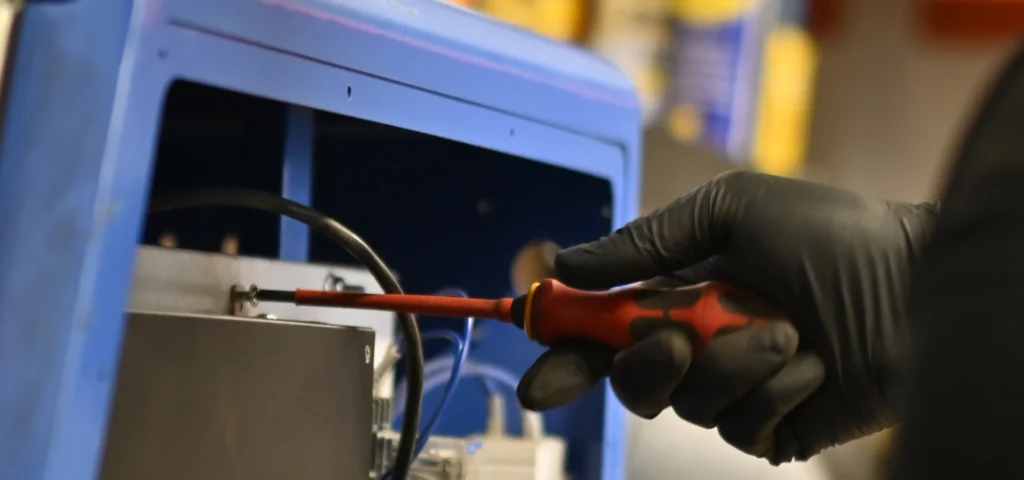
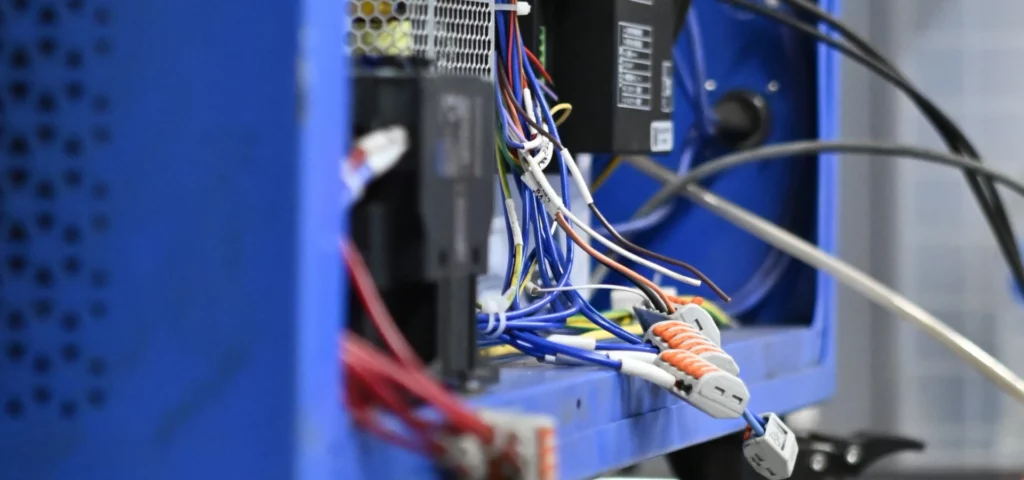
→ Electrical faults. Site work is hard on machines. Vibration and moisture find the weak joints eventually. A lot of what comes into our workshop is electrical rather than optical.
→ Fibre damage. The umbilical between source and head doesn’t like being crushed or driven over. This one is more serious and more expensive. Worth treating carefully for that reason alone.
→ Source degradation. Genuine decline in the laser source is rarer than people assume. It shows as gradual loss of performance over a long period rather than sudden failure. Most machines that seem to be losing power have something simpler wrong with them.
What’s usually repairable
Most faults on most machines are. Optics, cooling components, scanners and wiring are all serviceable. We carry the parts for them.
That’s the part people expect to be difficult and usually isn’t. Owners often assume a fault means weeks of waiting on a component from overseas. For the great majority of repairs it doesn’t, because the part is already on our shelf.
The exceptions are narrow and worth being straight about.
→ Some machines use proprietary components that only their original manufacturer supplies. If that supplier has gone quiet, a minor fault can become a difficult one. It’s not common and it’s usually apparent early.
→ Undocumented machines take longer to work on because there’s nothing to work from.
→ Where a source has genuinely failed on an older low-cost machine, the economics sometimes don’t work. The honest answer then is that it isn’t worth repairing.
We’d rather tell you that than take the machine in and charge you to find out.
We service machines we didn’t sell
Worth saying plainly because people assume otherwise. Our workshop takes in machines from other suppliers, including units imported direct.
The usual reason people come to us is that their original supplier has gone quiet or is overseas. Sometimes the warranty has expired and there’s nobody in the UK to call.
The stock we hold covers the components that actually fail across most machines, so being bought elsewhere rarely changes what we can do. On the occasions something falls outside it we’ll say so before the work rather than after.
What drives the cost
We don’t publish repair prices. The range is genuinely wide and a figure quoted blind would be misleading.
What determines it is straightforward. Which component has failed. Whether it’s workshop or site work. Whether the part is one we stock, which most are.
The useful thing to know is that the dramatic failures are the rare ones. Most repairs land at the cheaper end.
Before you call
Tell us the make and model, what the machine is doing now and when it started. A short video of the symptom helps more than anything else. It often identifies the fault before the machine reaches us.
Most of this is preventable
Not all of it. A decent share though.
The protective window is a consumable and needs checking. Filters block. Cooling systems need keeping clean. The fibre needs routing so it doesn’t get crushed.
None of it is complicated and most of it takes minutes. Machines that arrive badly damaged have usually been run hard with nobody doing the small jobs.
If your machine has stopped doing what it should, send us a photo and a description. Get in touch with our team and we’ll tell you whether it’s worth repairing.