A good share of the emails we get ask two questions in the same message: what would it cost for you to do this, and what would it cost to hire or buy a machine?
It’s a sensible question. But the answer has changed over the years we’ve been doing this, and it’s now a lot shorter than it used to be. For almost everyone, the right route is to have a specialist do the work. There are exceptions, and they’re specific. Here’s how to tell which one you are.
The three routes in short
→ Subcontract. We come out and do the work. You get the result, and the risk, the skill and the liability all stay with us. On large projects, that can mean a LaserTec team based on your site for the duration.
→ Hire. A machine comes to you for a set period and your people run it. We do this for a specific kind of organisation, and we’ll be plain about which.
→ Buy. You own it, run it and maintain it. We sell to companies that will use a laser most days for one repeated purpose and can protect the people around it, and into automated systems.
We sell, hire and subcontract, so we’ve no commercial reason to steer you wrong. We are going to steer you, though, because the wrong choice here isn’t just expensive. It’s dangerous, and increasingly it’s unlawful.
First, the part nobody selling cheap lasers will tell you
A laser cleaner is not a tool in the way a sander or a wire brush is a tool. It’s a Class 4 laser, the highest hazard class there is. It won’t kill you. It will blind you, and it can do it in a fraction of a second from a reflection off something you weren’t even pointing at. It will burn skin and it will ignite materials. The material it strips doesn’t vanish either; it becomes airborne, and if that’s lead paint or chromate primer you’ve now got a fume problem on top of the beam.
None of that is a reason not to use lasers. It’s the reason using them is regulated. In the UK, putting a Class 4 laser to work triggers the Control of Artificial Optical Radiation at Work Regulations 2010, on top of PUWER and COSHH. Between them they require a proper risk assessment, a controlled area, engineering controls, extraction, trained operators and, in practice, a named person responsible for laser safety. That isn’t paperwork for its own sake. It’s the minimum.
The uncomfortable truth is that a growing number of small firms and individuals are buying machines, often direct from overseas, and running them with none of that in place. Some don’t know. Some do. Either way they’re operating illegally, and if they’re on your site, the problem is yours too. Import one yourself and the compliance burden lands squarely on you, and much of what’s shipping doesn’t meet UK requirements as it comes out of the box.
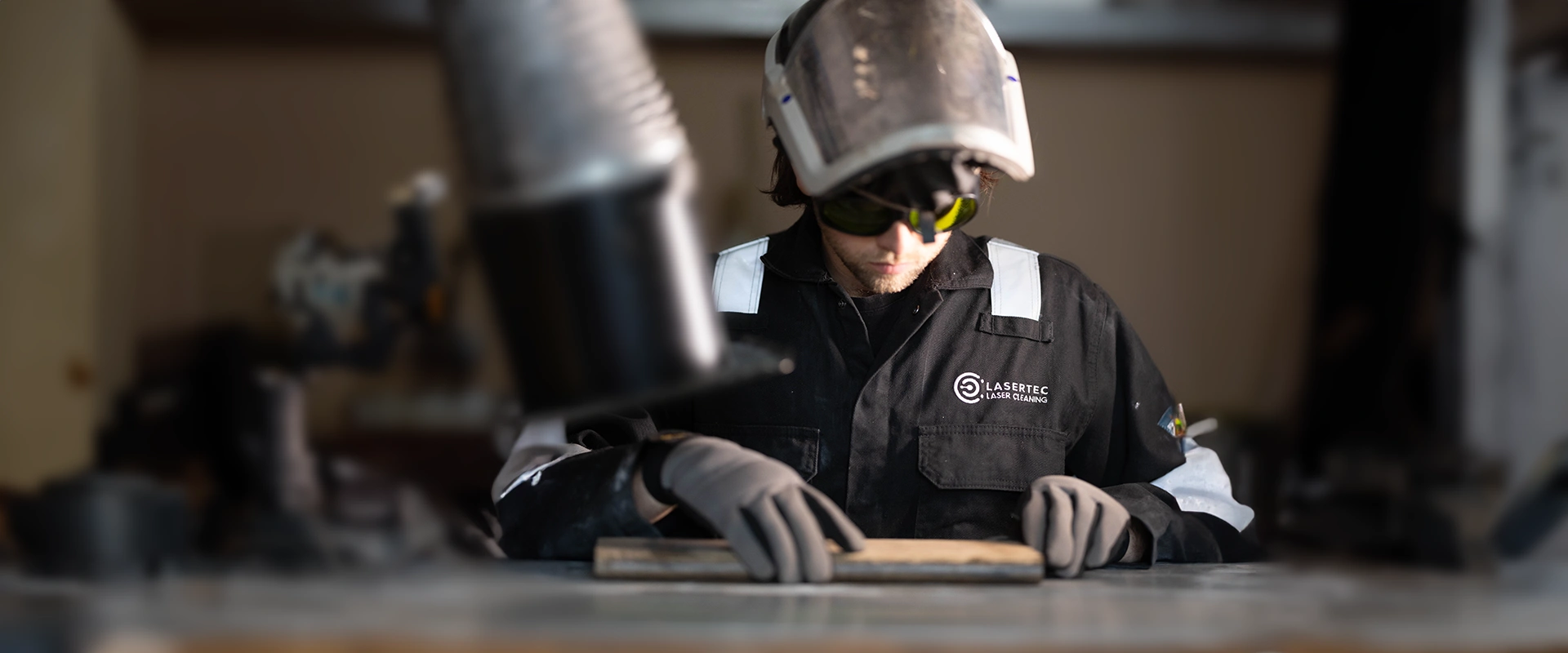
Then there’s the skill. Two operators with the same machine produce different results on the same surface, and experience is most of that gap. The settings that gently lift paint from one substrate will chew straight through another. Our own operatives aren’t allowed on site unsupervised for around six months. They’re shadowed, corrected and trained on each technique in turn, because the way you clean one thing is the way you damage the next.
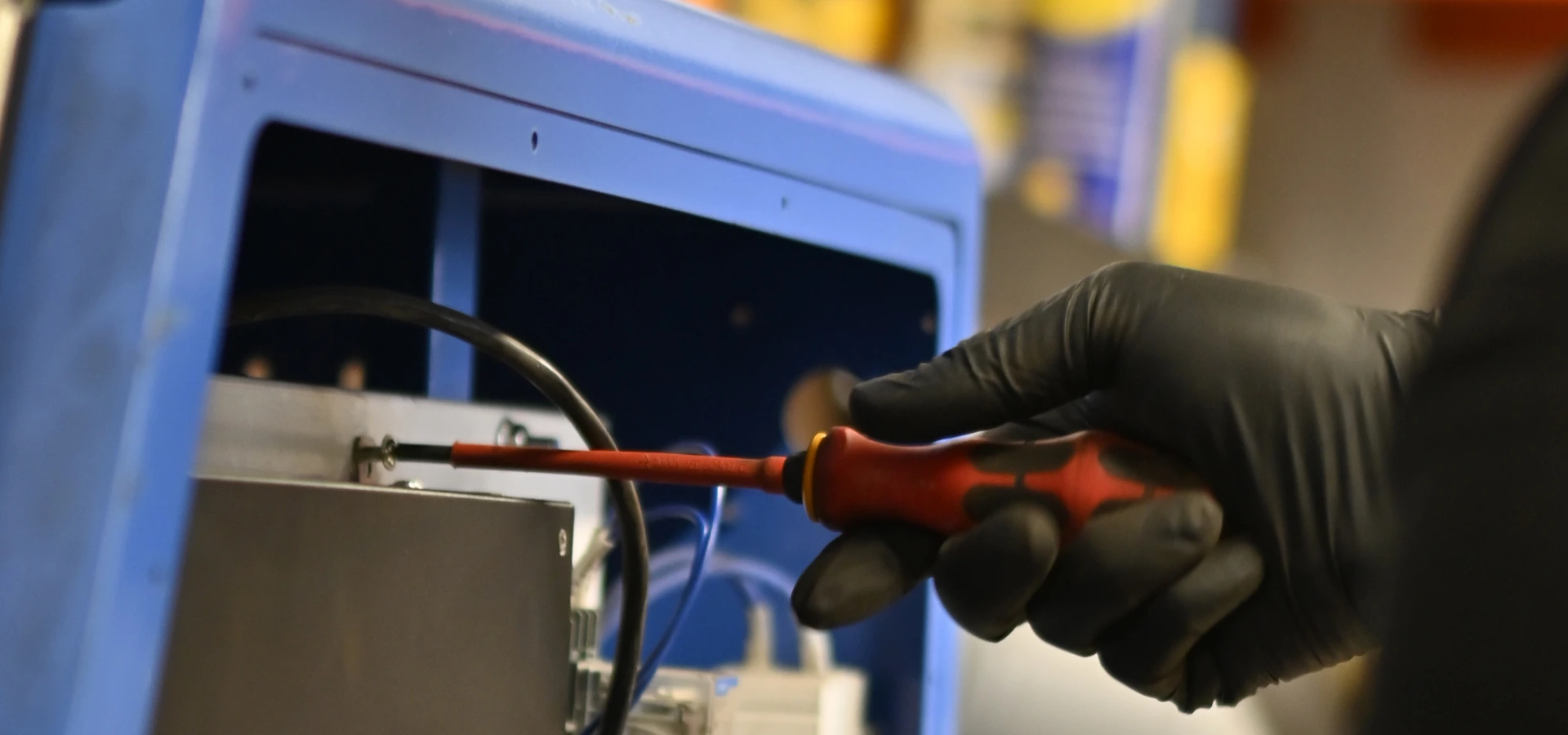
And then there’s the machine itself. These are sensitive, temperamental pieces of equipment. Treat one the way you’d treat an angle grinder and it will break, and the repair bill is measured in tens of thousands.
Subcontract: the answer for almost everyone
This is what we do, and it’s what laser cleaning is: a specialist technique for surface preparation and restoration, delivered by specialists. Contractors bring us in when laser cleaning is required, the same way they’d bring in any other specialist trade. If you’d rather we worked under your banner, we do that too.
It fits when:
→ You’ve got a job that needs laser cleaning. One-off or repeated, small or large. This is the default.
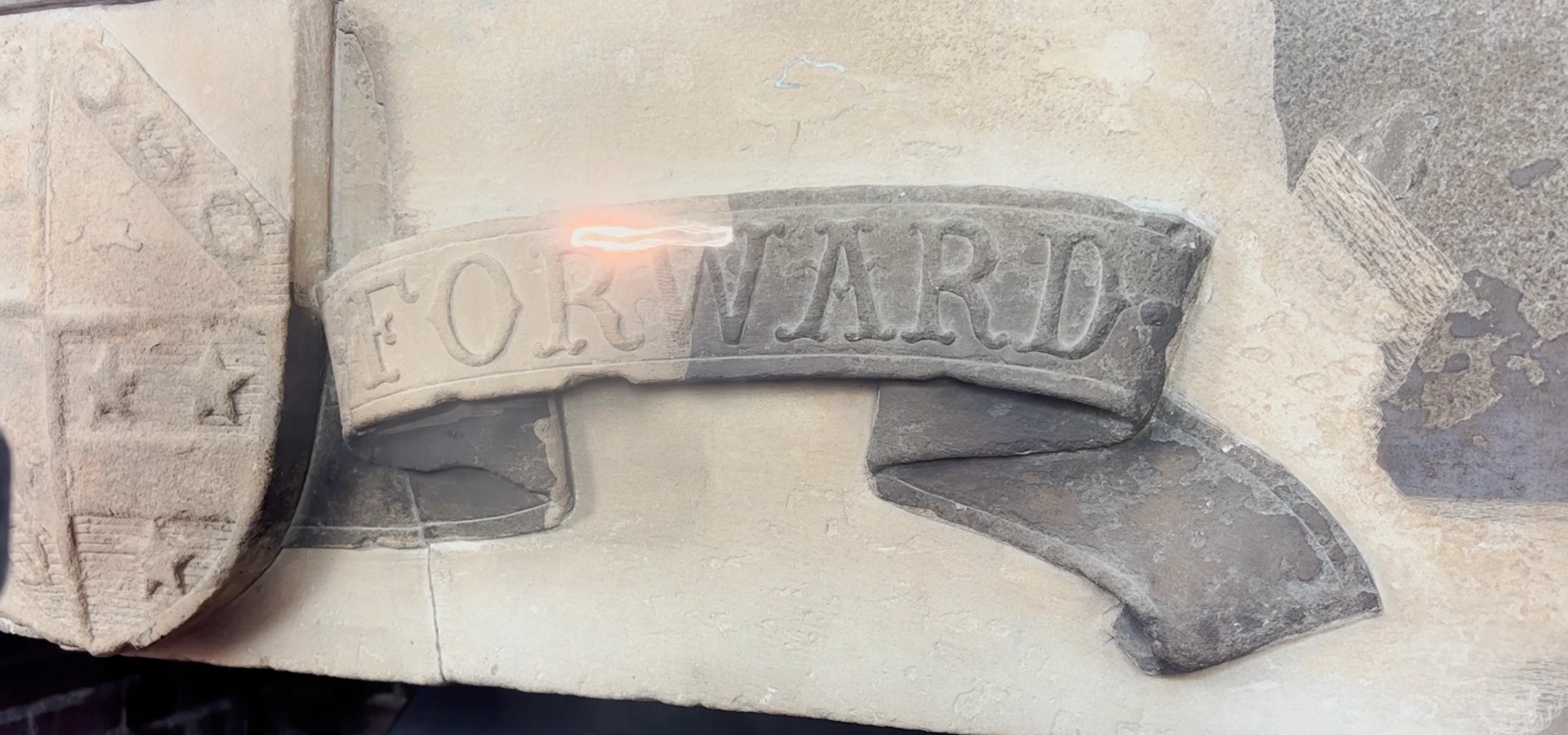
→ The surface is valuable, historic or difficult. Heritage stone, carved detail, listed work, and anything where getting it wrong is costly.
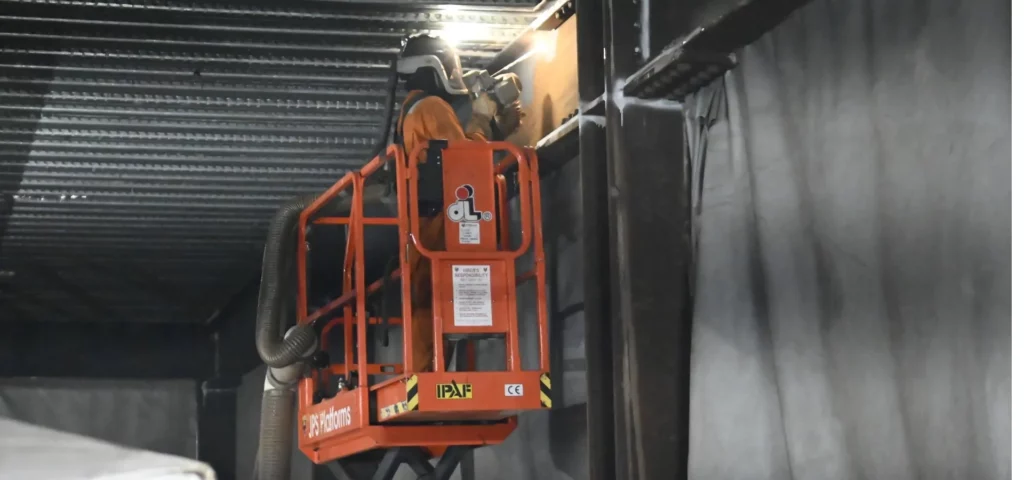
→ The job sits inside a bigger programme. On a live construction site, during a plant shutdown or on a fire and smoke reinstatement, the main contractor or insurer wants method statements, RAMS, insurance and a crew that turns up ready. That comes with us.
→ You want the liability to sit somewhere other than with you. When we’re contracted, the risk, the compliance and the skill set are all ours. If something goes wrong, it’s our problem.
On large and long-running projects there’s a version of this that works better than calling us in job by job. We put a trained LaserTec team on your site on a retainer, for the life of the project, so laser cleaning is available as and when the programme needs it, for whatever it needs it for. The machines stay maintained because our people are maintaining them, the work is done by people who do it every day, and nobody is waiting on availability.
We’ve sold machines to businesses who later came back asking us to buy them back. Not because the machine was wrong, but because it was never going to work in untrained hands. That taught us something, and it’s why the next two sections read the way they do.
Hire: only for organisations built to handle it
We do hire machines, but not to most of the people who ask.
Hire only works where the organisation has the engineering and safety infrastructure to run a Class 4 laser properly: a laser safety officer, a controlled area with exclusion zones, extraction, and operators who’ve been trained and assessed. In practice that means large engineering and industrial organisations that already handle equipment of this class. It does not mean sole traders, small contractors or anyone hoping to learn on the job.
If you’re that kind of organisation but don’t yet have the area or the trained people, that isn’t the end of the conversation. We can be contracted to put both in place first: train your operators, set up the controlled area, extraction and exclusion zones, and make the space safe to run a laser in. Then the machine arrives. In that order, never the other way round.
We hold that line because we’ve seen what happens otherwise. Hires into teams without the experience run over or fail outright, and the machine rarely comes back the way it went out. That’s bad for you, bad for us and bad for the reputation of the technique.
If you’ve got a defined block of work with a start and an end, talk to us.
Buy: one job, done daily, done properly
Ownership makes sense in a narrow set of circumstances, and we hold to them when we sell.
It fits when:
→ The laser will do one job, repeatedly, most days. The same component, the same surface, the same process, often enough that bringing us in each time stops making sense.
→ You can put the protections in place. A controlled area, exclusion zones, interlocks, extraction and a laser safety officer. Not planned. In place.
→ You’ll build a laser specialist of your own. One person or a small team, trained properly and doing this often enough to stay sharp. Not a tool passed around the workshop.
→ Or the laser is built into an automated cell, enclosed and interlocked, running the same way every shift. We design and integrate those systems.
What we won’t do is sell a handheld machine to a company whose business is something else and who’d use it now and then. If you’re a fabricator, a restorer, a facilities firm or a contractor with a job that comes round a few times a year, buying isn’t for you. Contract a specialist laser cleaning company to do the work, whether that’s us or someone else who holds themselves to the same standard.
When we do sell, you’re not left to your own devices. We offer service level agreements and warranties, so the maintenance and servicing sit with us and there’s somewhere to turn when something goes wrong.
The questions that actually decide it
→ Is the laser going into an automated, enclosed process? Buy.
→ Will it run most days on one repeated job, with the protections in place and someone you’ll train into a specialist? Buy, with an SLA behind it.
→ Do you have a laser safety officer, a controlled area and trained operators, or will you contract us to set that up first, and a defined block of work? Hire.
→ A long project with laser work coming and going for months? A LaserTec team on site, on retainer.
→ Anything else? Subcontract. Not as a compromise, but because it’s the right answer.
When none of the three is right
Worth saying, because it saves everyone time.
A large share of our enquiries are domestic jobs, and most of them aren’t viable. Stripping paint from a staircase or a set of garden furniture costs more with a specialist than a decorator would charge for the whole job, and we don’t hire to individuals, so there’s no cheap route around that.
There are exceptions. Heritage and listed properties where abrasive cleaning isn’t permitted. Pieces that can come to a workshop rather than a machine going out to them. Anything where the surface underneath genuinely can’t be risked.
If your job falls outside those, we’ll tell you plainly and point you at what would work better.
The short version
→ Laser cleaning is a specialist trade, not a tool you pick up. Get a specialist in.
→ Long project with recurring laser work: put a LaserTec team on site.
→ Hire: organisations with the safety infrastructure and trained operators. We can put both in place first.
→ Buy: one repeated job, most days, with protections in place and your own trained specialist, or an automated system. With an SLA behind it.
→ Not a specialist and about to buy a handheld for occasional use? Don’t.
Still unsure which route fits? Get in touch and tell us about the job, or book a demonstration on your own materials. We work across the UK, and we’ll tell you which route we’d recommend, including when the answer is none of them.