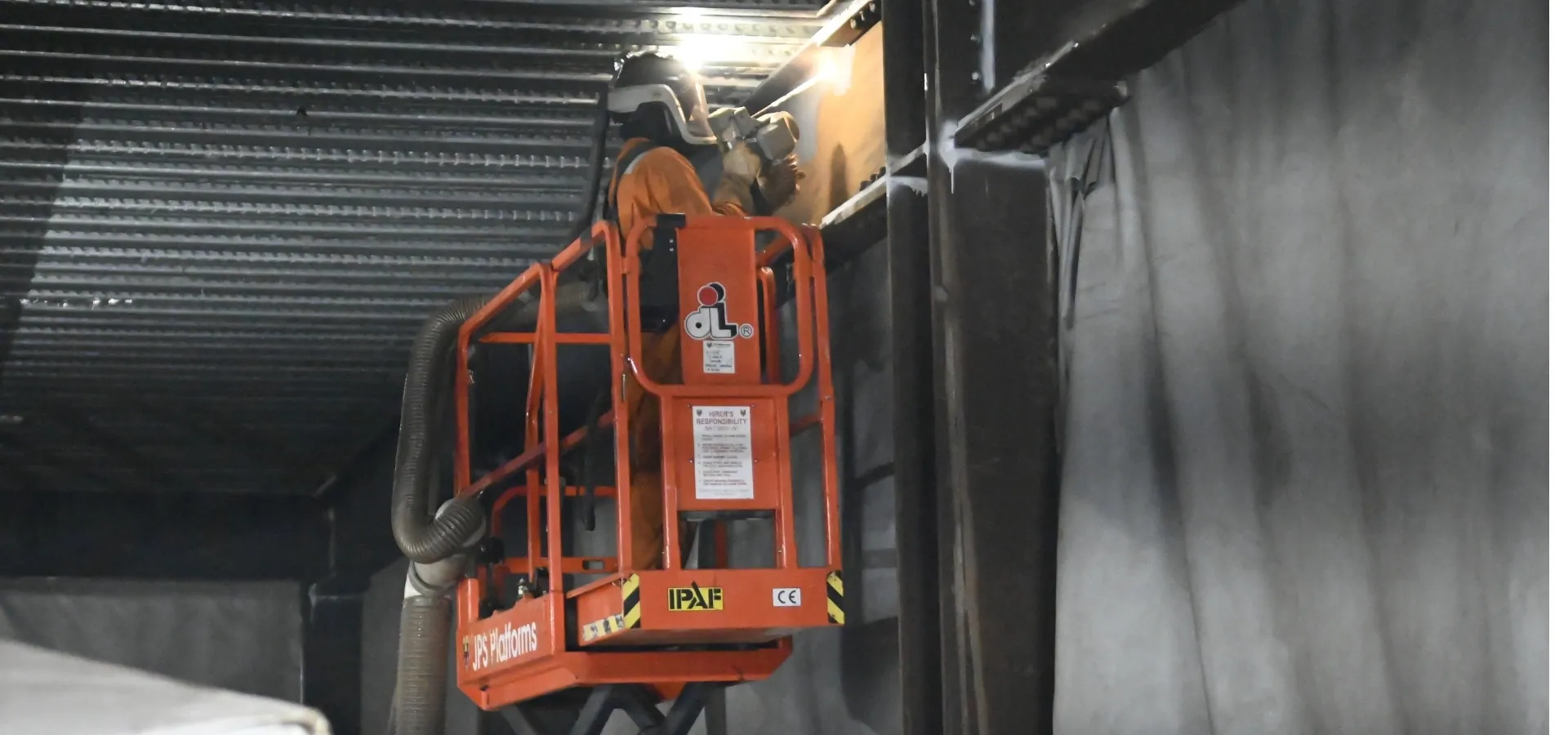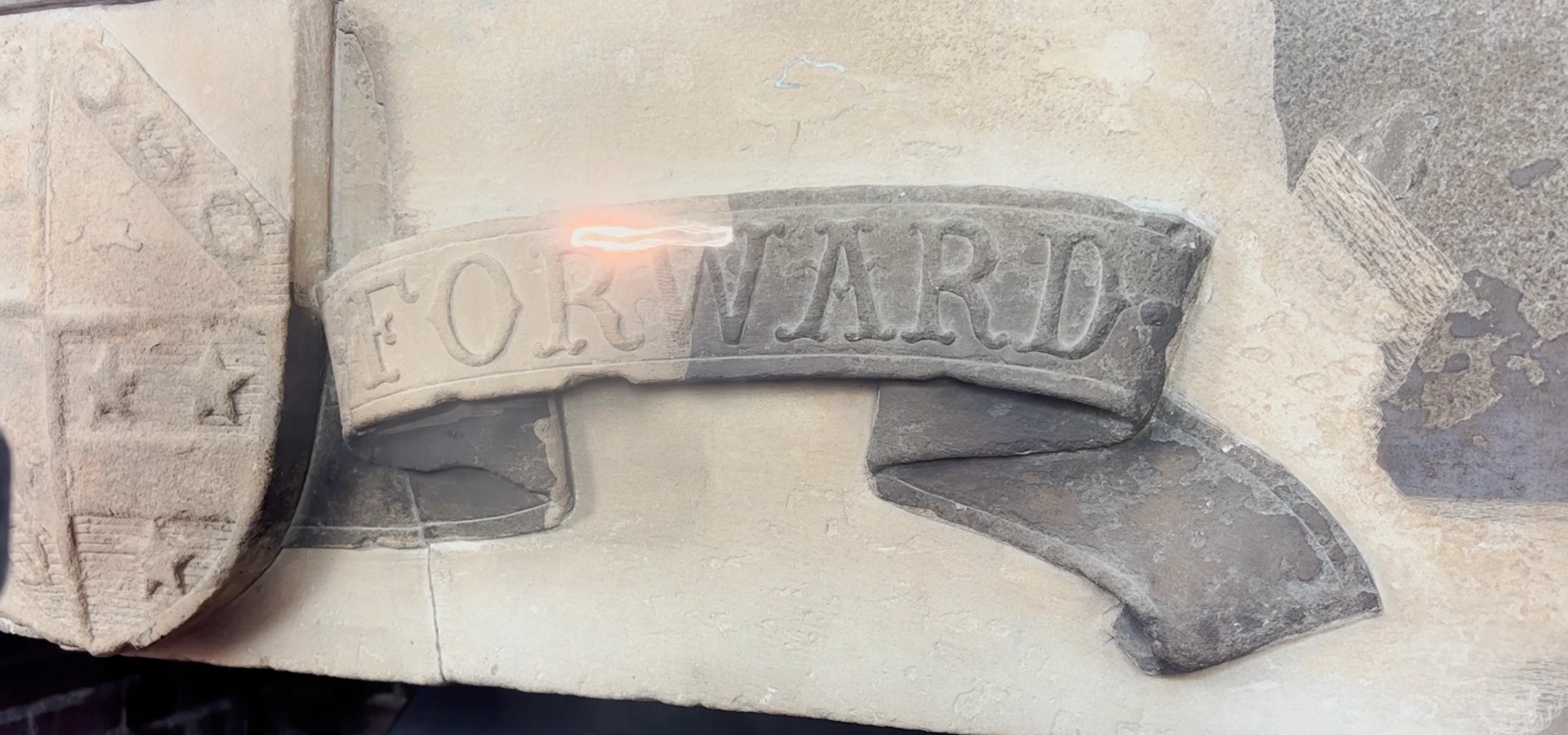
Laser cleaning removes rust, paint, soot and coatings using pulses of focused light. The contamination absorbs the energy and lifts away as dust and vapour. The surface underneath absorbs far less of it and stays largely unaffected. No tool or abrasive touches the surface and no chemicals, grit or water are involved.
That’s the short version of how laser cleaning works. Here’s what’s actually happening and what most explanations leave out.
Laser cleaning in six steps
- The laser fires very short pulses of infrared light at the surface.
- The contamination absorbs that energy and heats up almost instantly.
- The surface underneath absorbs much less of it and stays comparatively cool.
- The contamination vaporises, breaks down or is shocked off the surface by the sudden heating.
- Extraction captures the dust and fume that comes off.
- What’s left is a clean surface with the material underneath left in place.
No tool, brush or abrasive touches the surface. Only light reaches it. That’s what makes it different from blasting, sanding or scraping, where something physically strikes or rubs the surface.
Why the contamination goes and the surface stays
This is the question underneath the question. The answer is selective absorption.
Different materials absorb light very differently. Rust, paint and soot absorb infrared energy strongly and heat up fast. A clean metal surface underneath reflects much more of it and absorbs much less. So the same pulse of light does a great deal to the contamination and comparatively little to what’s beneath it.
Every material also has a threshold, which is the point below which the laser does nothing to it and above which it starts to be affected. The skill in laser cleaning is working in the gap between those two thresholds. Enough energy to clear the coating. Not enough to damage the substrate.
On steel that gap is wide, which is why metal is forgiving. On timber it’s much narrower. On soft or historic stone it’s narrower again. That gap is why some jobs are straightforward and others need far more care.
Every job starts with a proof of concept assessment to get the setup right. On steel that’s quick. On historic stone or delicate timber it decides whether the job goes ahead at all.
Why the pulses are so short
The pulses are extremely brief, with gaps in between. That matters more than it sounds.
A short pulse delivers its energy before heat has time to spread into the material underneath. The surface of the contamination gets what it needs. The substrate doesn’t have the opportunity to absorb much. In the gap between pulses, everything cools slightly.
This is why laser cleaning can be controlled so precisely. Adjust the energy, the pulse length and how fast the beam moves. The same machine can take off one thin layer of coating or clear decades of heavy rust.
Most industrial cleaning lasers work this way, in pulses. Continuous wave machines also exist and they behave differently, trading some of that control for speed. Which one suits a job is a question in its own right.
Is laser ablation the same as laser cleaning?
Broadly yes. The different words come from different worlds.
Ablation is the technical term for removing material from a surface with laser energy. It’s what you’ll see in academic papers and in equipment specifications. Laser cleaning is the commercial name for using that process to remove contamination rather than to shape or mark a material.
Same physics underneath. Different language depending on who’s writing.
What a laser cleaner is made of
Three parts, essentially.
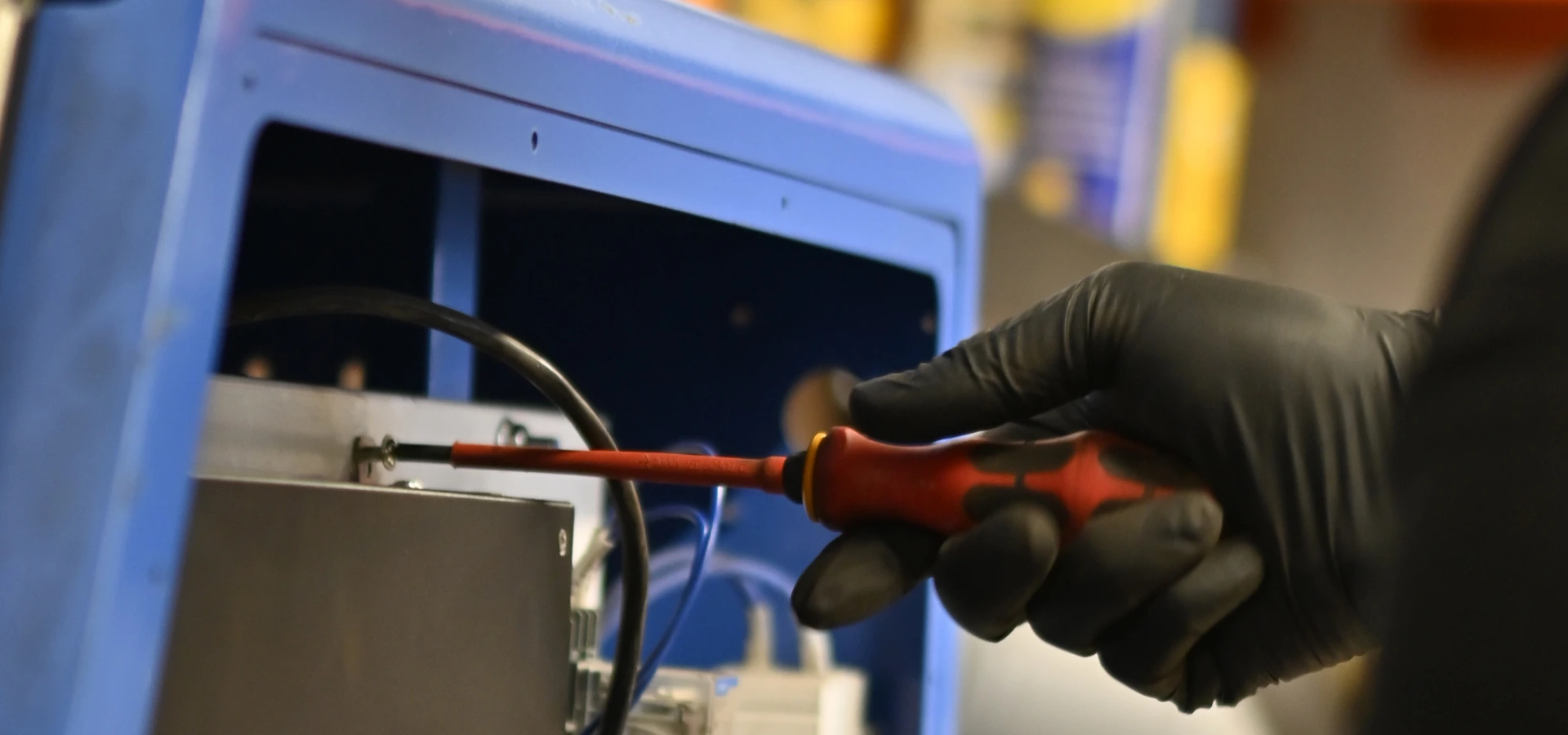
→ The source. The laser itself, usually a fibre laser, which generates the beam. This is the expensive component.
→ The head. What the operator holds or what’s mounted in an automated cell. Inside it a scanner moves the beam rapidly across the surface, which is what spreads the cleaning across an area rather than burning a single point.
→ Extraction. The contamination doesn’t disappear. It becomes airborne dust and fume that has to be captured. On lead paint or chromate primer this matters a great deal.
People often forget the third one. Controlling that fume is a legal duty rather than good practice. Extraction is how it’s done.
What the videos don’t show you
Laser cleaning videos are satisfying to watch and slightly misleading. Rust vanishes in a single effortless pass and the surface comes up perfect. Worth knowing what’s been edited out.
→ Speed. Many of those clips are sped up or show the easiest possible surface. Real work is slower, particularly on anything delicate where the approach has to be careful rather than quick.
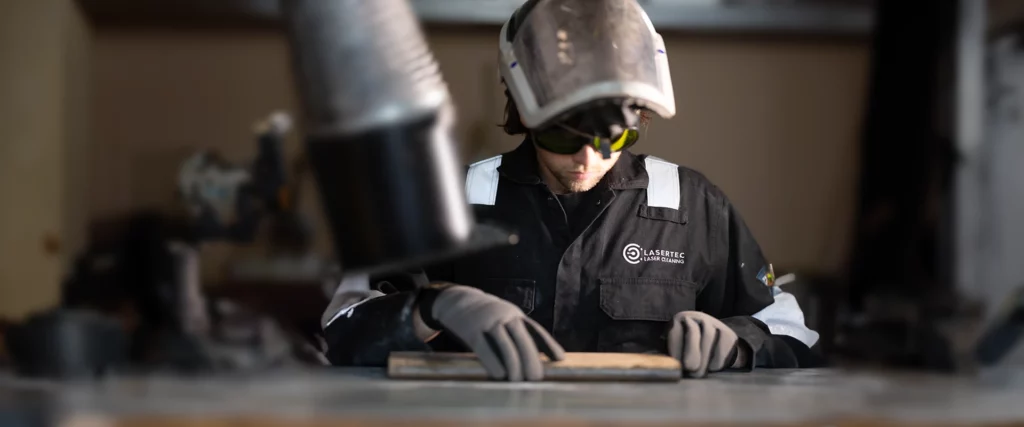
→ Setup. Before anyone starts there’s a controlled area, exclusion zones, extraction, eyewear and a risk assessment. These are Class 4 lasers and the setup is a genuine part of the job.
→ The jobs that didn’t work. Nobody posts the test patch that scorched. The surface that discoloured. The coating that wouldn’t lift without taking the substrate with it. Those exist.
→ The operator. The same machine in different hands produces different results on the same surface. Experience is most of that gap. It’s the variable that gets left out of most explanations, because most explanations are written by people selling equipment.
Does it damage the surface underneath?
Usually not. That’s the whole point of the method. But the honest answer depends on the material and on how the laser is set up.
Metal is generally forgiving, though thin sections can distort. Timber is more delicate and can scorch or raise the grain. Stone can lighten or shift in colour. None of these are reasons to avoid laser cleaning. They’re why every job starts with a proof of concept assessment. On delicate surfaces that assessment carries even more weight.
→ More detail in does laser cleaning damage the surface.
What can laser cleaning remove?
Rust, mill scale, paint, varnish, soot, oils, carbon crust, graffiti, coatings and some surface biological growth. The list is broad because the principle is broad. If the contamination absorbs the energy more readily than the surface beneath it, laser cleaning has something to work with.
What it struggles with is anything transparent, anything highly reflective and anything it can’t see directly, because a beam needs line of sight.
→ More in what can laser cleaning remove and the limitations of laser cleaning.
Where it earns its place
Laser cleaning isn’t the fastest option for every job. Where it wins is where the surface underneath matters or where the mess of other methods is the real problem.
→ Heritage, listed and carved work, where abrasive methods would erode the detail.
→ Occupied buildings, live plant and clean environments, where containment, media or water would be difficult or impossible.
→ Selective work, where you need one layer gone and the next left alone.
→ Anywhere dismantling and transporting components costs more than cleaning them in place.
The part that matters most
The physics is the easy bit to explain. What decides your result is the machine and the judgement of whoever’s holding it.
Two operators with identical equipment produce different results on the same surface. That’s why laser cleaning is a specialist trade rather than a tool you pick up. It’s also why the sensible route for almost everyone is to have a specialist do the work.
→ More on choosing between subcontracting, hire and buying.
Want to see it on your own material rather than in a video? Book a demonstration and we’ll show you the result on your surface.