This is the question we are asked more than any other. Someone has a run of Victorian sash windows, a set of panelled doors or a blackened oak frame, and they want the paint off without wrecking what is underneath. Sanding is slow and takes material with it. Chemicals are messy and soak in. Blasting is out of the question on anything with detail.
So the appeal of a laser is obvious. What is less obvious, and what almost nobody explains properly, is what the process actually does to the timber. Here is the straight version.
The short answer
A laser can remove paint and varnish from timber, and on the right job the results are very good. But wood is harder to work on than metal, the margin for error is smaller, and the outcome depends heavily on the laser and how it is set up rather than on the wood alone.
Two operators with different machines can produce two completely different results on the same door. One takes the paint off and leaves sound timber. The other leaves scorch marks. That difference is not the wood, it is the equipment and the judgement behind it.
Why timber is harder than metal
Laser cleaning works because paint absorbs the energy strongly while the surface beneath absorbs far less of it. On steel that gap is wide, which is why metal is forgiving.
On timber the gap is much narrower. Wood is organic, it holds moisture, and it begins to char at a far lower temperature than steel can tolerate. So the window between clearing the paint and marking the wood is tighter, and staying inside it takes more control and more time.
That is the whole story of laser work on timber. It is not that it cannot be done well. It is that it has to be done slowly.
What can go wrong
Three things, and they are worth knowing about before you commission the work rather than after.
→ Scorching. If too much energy reaches the wood, or dwells in one place too long, the surface darkens or chars. On a paint finish that is going back on afterwards this may not matter. On timber you intend to leave bare or wax, it matters a great deal.
→ Grain raise. Timber is not uniformly dense. The softer early growth in each ring erodes more readily than the harder late growth, so as the paint comes away the surface can end up slightly more textured than it started. On a rough beam that reads as character. On fine joinery it may need light finishing afterwards.
→ Resin bleed. In resinous softwoods such as pine and larch, heat can draw resin toward the surface, leaving patches that are sticky or shiny. This matters most if you are refinishing, because those areas can take stain or paint differently from the timber around them.
None of these are guaranteed to happen. All of them are possible, and any contractor telling you otherwise has not done much of this work.
Softwood and hardwood behave differently
Softwood is less dense and more absorbent, so it scorches more readily and shows grain raise more clearly. Pine sash windows and painted softwood joinery are entirely workable, but they sit at the more delicate end and the work is slower.
Hardwood is generally more forgiving. Oak in particular tends to take the process well, which is why laser is often chosen for blackened historic beams and frames where sanding would remove material and blasting would destroy the surface.
Age plays into this too. Old, seasoned timber behaves differently from new, and reclaimed timber can hold contamination well below the paint layer that only becomes apparent once you start.
The paint matters as much as the wood
People focus on the timber and forget that the coating is half the problem.
→ Age and number of layers. A single coat of modern acrylic is straightforward. Eight decades of overpainting is a different job entirely, because each layer behaves differently and the lowest layer has usually bonded into the grain.
→ Colour. Dark paint absorbs laser energy readily. Pale and white paints reflect more of it, so they are often slower and more stubborn to shift, which surprises people who assume a thin white coat will be the easy option.
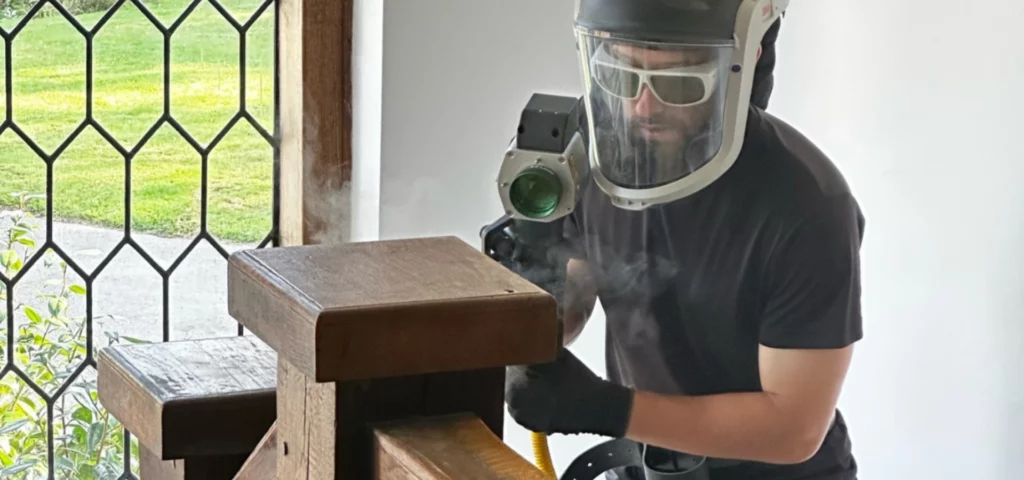
→ What is in it. Older paint on UK period property may well contain lead. That does not rule out laser cleaning, and in some respects a contained process is preferable to sanding lead paint into the air, but it does mean the work needs proper extraction and health controls in place. Anyone quoting for period joinery without raising this is not thinking about it hard enough.
Why the slow approach is the safe one
The instinct is to want the paint off quickly. On timber that instinct works against you.
Working at lower energy over more passes gives the wood less opportunity to build up heat, and it lets the operator see what is happening and stop. Pushing harder to save time is exactly how scorch marks appear. A job that could be done cleanly in a day at a measured pace can be ruined in an hour by rushing it.
This is why an hourly rate on its own tells you very little about laser work on timber. What you are paying for is the restraint.
What the result actually looks like
Worth setting expectations honestly, because photographs online tend to show the best day anyone ever had.
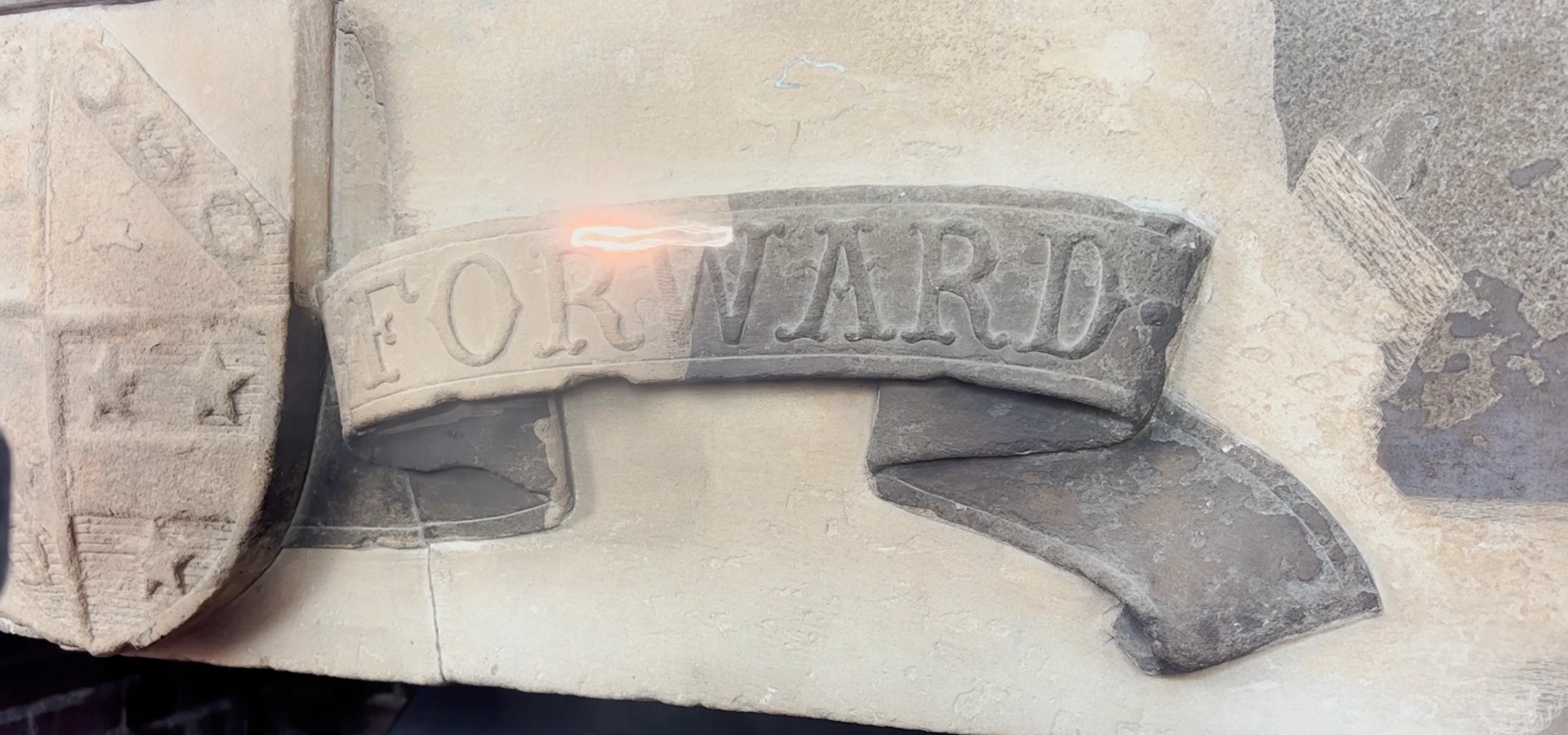
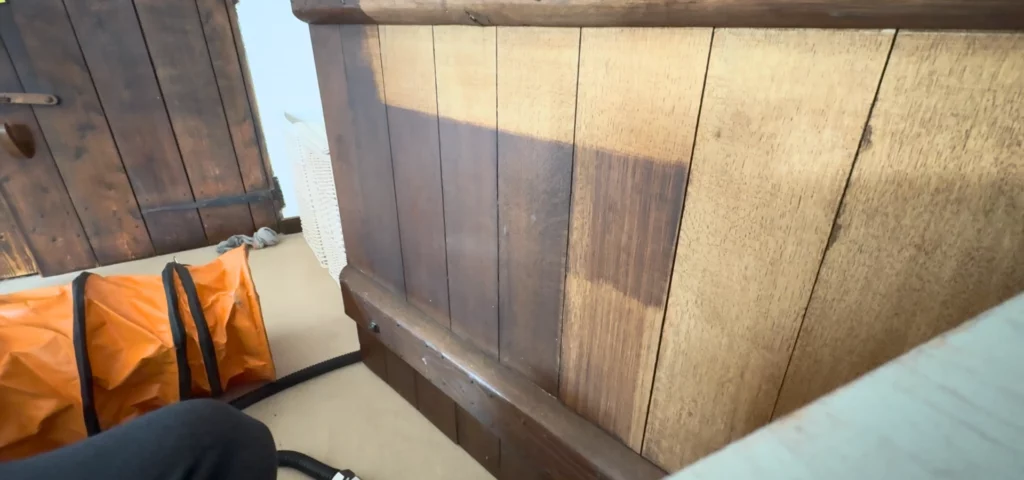
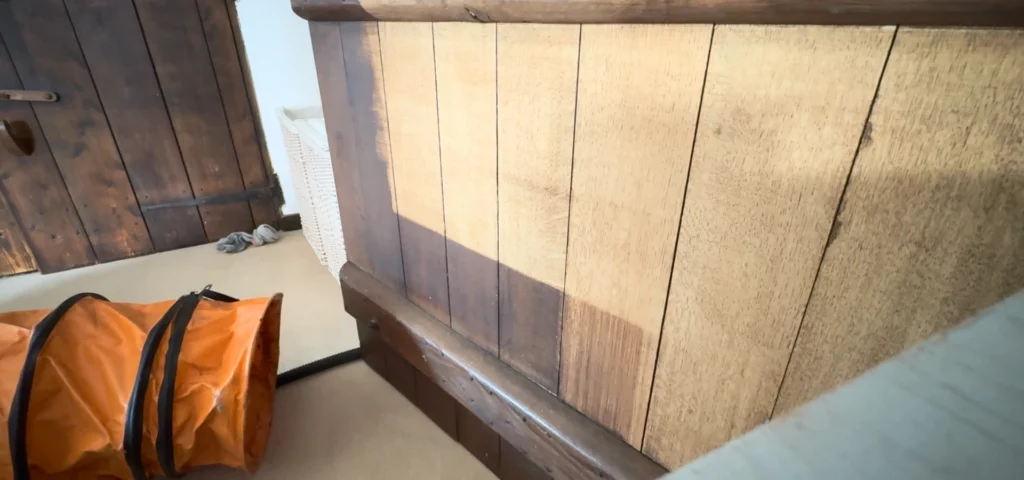
A good result gives you timber that is clean, free of coating and structurally untouched, with the grain and any carved or moulded detail intact. What it does not give you is a factory-fresh sanded finish. The timber may be slightly lighter in places, the grain may be a little more pronounced, and some jobs need a light hand-finish afterwards before you paint or wax.
If your bar is “the paint is gone and the joinery is sound and the detail survived”, laser will very often clear it. If your bar is “it looks like new timber”, no stripping method will get you there, laser included.
The honest caveat
On aged paint over timber, results vary and we cannot guarantee against some change to the wood. Old paint can be bonded into the grain deeply enough that removing all of it means affecting the surface underneath.
This is why we test an area first on any timber job of consequence. You see the actual result on your actual timber before committing to the whole run. And if the test tells us the finish will not be acceptable, we will say so and tell you what would work better, whether that is another method or a different approach entirely.
→ Read more about how we approach this kind of work in restoration.
The way to know how your timber will respond is to see it happen. Book a demo with our team and we will test your material and show you the result before you commit to anything.