Most of what you will read about laser cleaning online is written by people selling it. So here is the other half of the picture, which is where the process struggles, where it costs more than it saves, and where we would tell you to use something else.
We would rather have this conversation before a job than after one.
Coverage rate on large open areas
A laser works in a comparatively narrow path and removes coatings selectively, which is exactly what makes it precise. On a large, open, uncomplicated surface, that precision means it covers ground more slowly than a purely abrasive approach.
What that does not tell you is the cost of the job. The hourly rate is rarely the whole bill. Containment, media supply, waste handling, masking, downtime and the risk of damage to what sits nearby all carry cost, and laser cleaning removes or reduces most of them. Which method works out cheaper overall depends on how much of that applies to your site, and it is worth working out properly rather than assuming either way.
Thick coatings take longer than people expect
Laser cleaning removes coatings in layers. A thin coating comes away quickly. Heavy, built-up, multi-layer coatings take considerably more passes, and the time adds up.
On very heavy build-up the practical route is sometimes a staged one, taking the bulk off first and using the laser for the final surface and the detail where precision matters. We will tell you if that is the case on your job.
Organic growth is a mixed result
Lichen, algae and moss come up constantly on stone and heritage enquiries, and the honest answer is that results vary more than they do on paint or rust.
Laser can remove surface growth. What it does not do is guarantee that the growth will not return, because the conditions that caused it in the first place are still there, whether that is damp, shade or the porosity of the stone itself. Biological growth also holds moisture, which changes how the surface responds.
If someone tells you laser cleaning permanently solves lichen, be sceptical.
Transparent and highly reflective materials are difficult
The process depends on the contamination absorbing the laser energy. That logic breaks down in two situations.
→ Transparent materials such as glass let much of the energy pass straight through, so there is little to work with at the surface.
→ Highly reflective surfaces bounce energy away rather than absorbing it, which makes the work less predictable and raises a safety consideration, since a reflected beam has to go somewhere.
Neither is an absolute no, but both need proper assessment rather than an assumption.
It only cleans what it can see
A laser needs line of sight. Whatever the beam cannot reach directly does not get cleaned.
That rules out or complicates a fair amount of real work. Deep internal bores, complex internal channels, blind cavities, the back faces of tightly packed assemblies. Blasting and chemical methods can get into places a beam cannot, and on those geometries they remain the better tool.
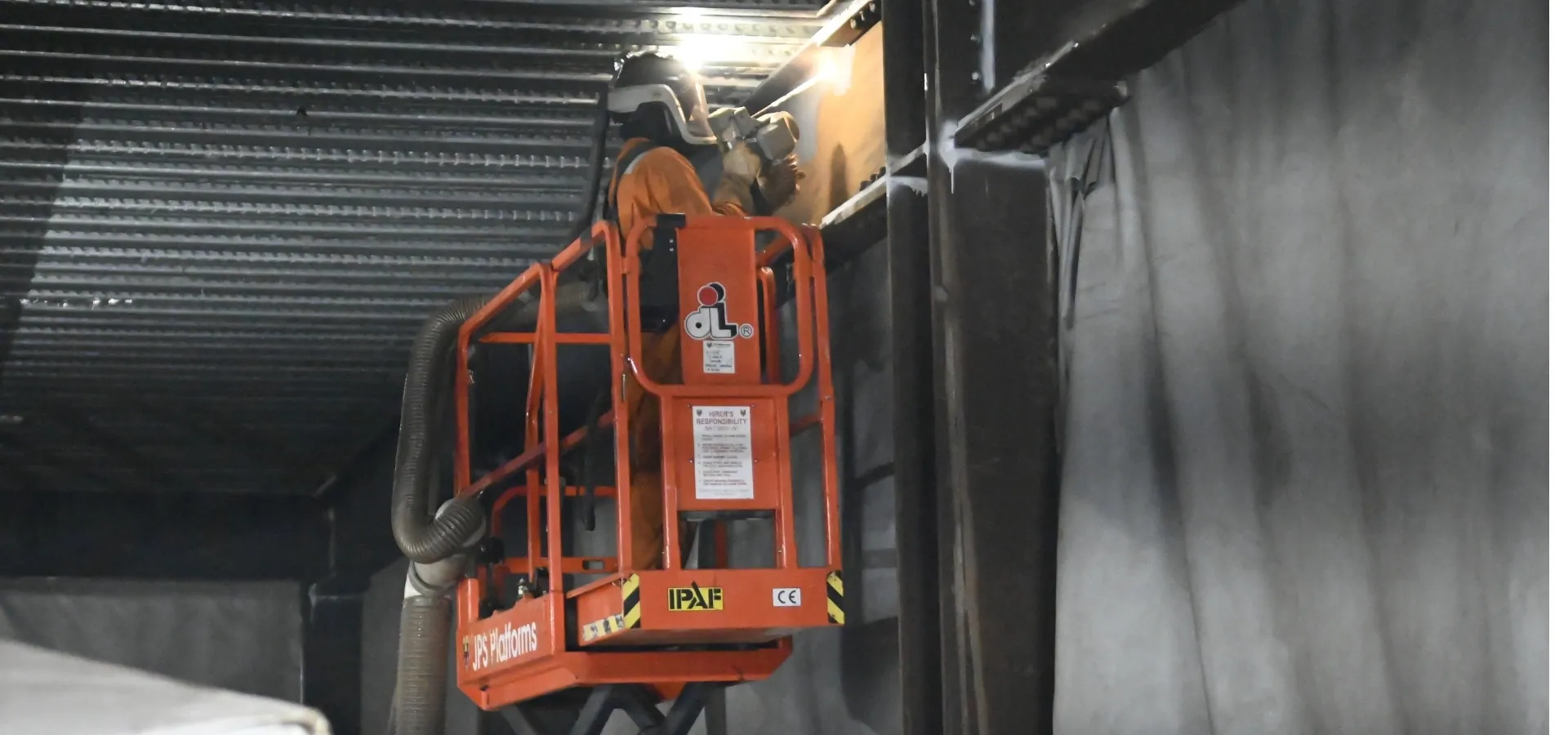
Access is the practical version of the same problem. If a laser cannot be brought within working distance of the surface, on scaffold, off a MEWP or by hand, the capability of the machine is academic.
The equipment is a serious capital cost
For anyone considering buying rather than commissioning, the machines are expensive relative to blasting kit. That is a genuine barrier and it is why plenty of firms subcontract laser work rather than owning it, or hire when a job calls for it.
The financial case only works at reasonable utilisation. A machine used occasionally is difficult to justify against the cost of bringing in someone who already has one.
It needs a competent operator, and that takes time
This is the limitation people underestimate most.
A laser cleaner is not a point-and-spray tool. The outcome depends heavily on the machine and the judgement of whoever is holding it, which is why two operators with identical equipment can produce entirely different results on the same surface. Scorched timber, discoloured stone and distorted thin metal are almost always operator and setup outcomes rather than failures of the method.
Class 4 lasers also bring real safety obligations and genuine training requirements. Buying the machine is the easy part.
Where laser cleaning does earn its place
None of the above makes it a poor process. It makes it a specific one. It tends to be the right answer when:
→ The surface underneath matters, on heritage, listed, carved or finished work.
→ Containment, media or water would be difficult, expensive or impossible, such as in occupied buildings, live plant or clean environments.
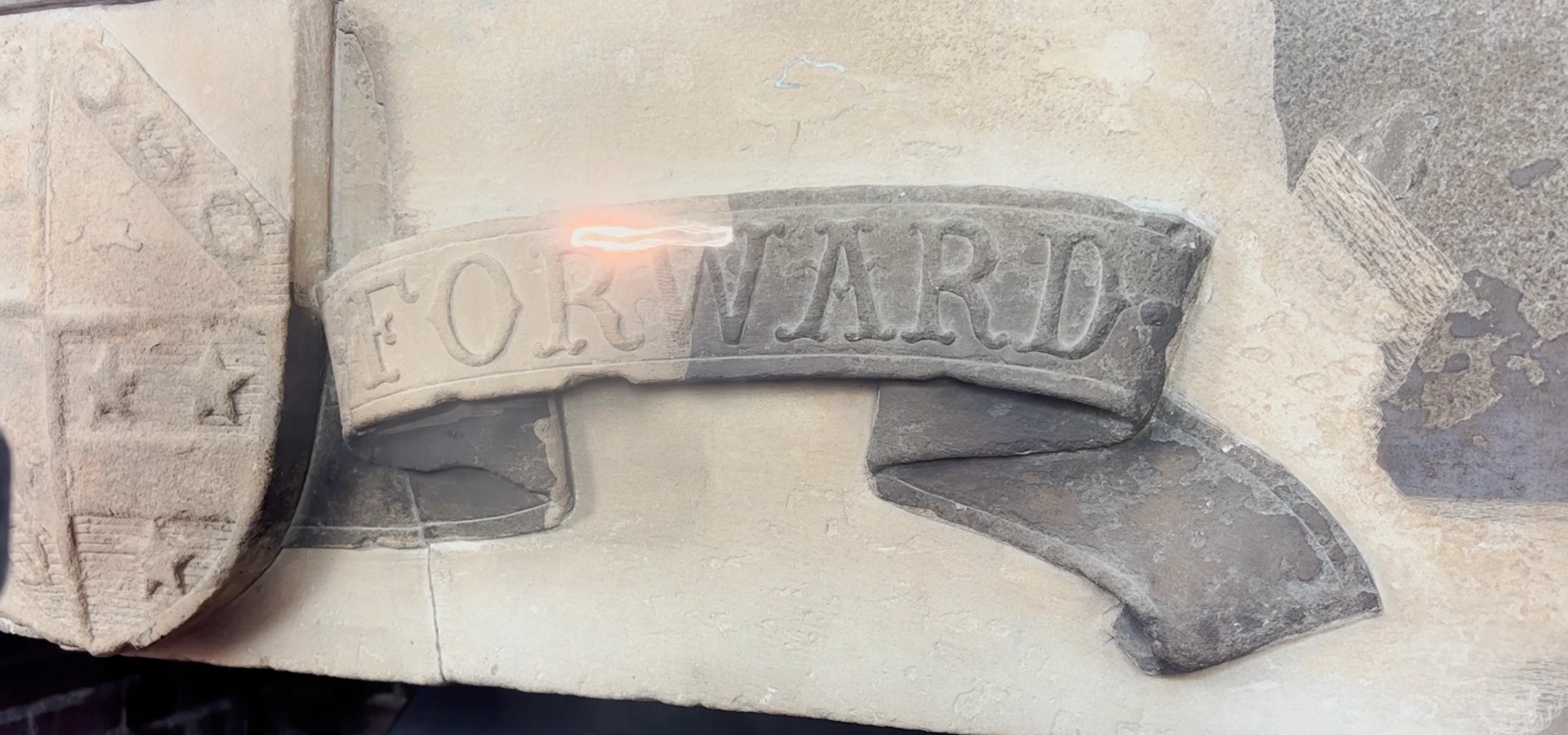
→ The detail must survive, on mouldings, profiles and carved stone that abrasive methods would erode.
→ Selectivity matters, where you need one layer gone and the next left alone.
→ Downtime is the real cost, and cleaning in place beats dismantling and transporting.
The honest summary
Laser cleaning is precise, controllable and often the only method that protects the surface underneath. It is not the fastest option on open volume work, it is not a universal solution, and it depends more on the operator than most people assume.
If your job is one where another method would serve you better, we will tell you. It is a better conversation than the alternative.
→ Related reading: common myths about laser cleaning.
If you want to know whether laser is right for your particular job, the quickest way to find out is to see it tested on your material. Book a demo with our team and we will show you the result before you commit to anything.