Laser cleaning is no longer the fringe technology it was five years ago. On UK refurbishment projects in particular it’s increasingly being specified for structural steel preparation, fire protection prep, facade restoration and contamination removal. But for most project managers the first time it lands in a tender or programme conversation is also the first time they’ve had to think seriously about how to bring it in.
This guide covers what you need to know to specify laser cleaning properly. What to write into your scope. How to budget for it. What to expect on programme. What to ask suppliers when you’re comparing quotes. It’s written for the people who have to make it work on a live project, not for laser physicists.
When laser cleaning is the right call
Laser cleaning isn’t always the best answer. It’s the best answer when one or more of these apply:
- You’re keeping the steel, not replacing it. Retained structural steel needs cleaning without surface damage. Laser cleaning doesn’t alter the base material, which makes it the natural fit for refurbishment projects built around reusing the existing frame.
- The site has environmental constraints. Listed buildings, occupied neighbours, live retail/commercial space, dust-sensitive operations or strict noise limits all make traditional abrasive methods difficult. Laser cleaning produces minimal dust, low noise and no abrasive waste.
- Carbon reporting matters on your project. Avoided waste and reduced vehicle movements from laser cleaning compared to grit blasting can move the needle on your overall project carbon number, and the figures are easy to evidence.
- The programme is tight. Laser cleaning is typically faster than equivalent grit blasting on structural steel, especially once you factor in containment, clean-down and waste removal.
If none of these apply, traditional methods may still be the right call. A good laser cleaning contractor will tell you when their solution isn’t the right fit.
What to include in your scope
A well-written laser cleaning scope should cover:
- The substrate and condition. What material is being cleaned (mild steel, stainless, cast iron, stone, concrete, brick) and what’s on it (rust, paint, intumescent, smoke damage, biological growth). Vague scopes lead to vague quotes. Include photos and reference areas where possible.
- The standard required. For structural steel being prepped for coating, this is usually SA 2½ or equivalent (ISO 8501-1). For exposed steel being left visible, agree an aesthetic standard up front. State the standard clearly and reference any coating manufacturer’s requirements that need to be met for warranty.
- The area. Total surface area in m², ideally broken down by element type (columns, beams, decking, connections). Connections and complex geometry take longer per m² than open beam faces.
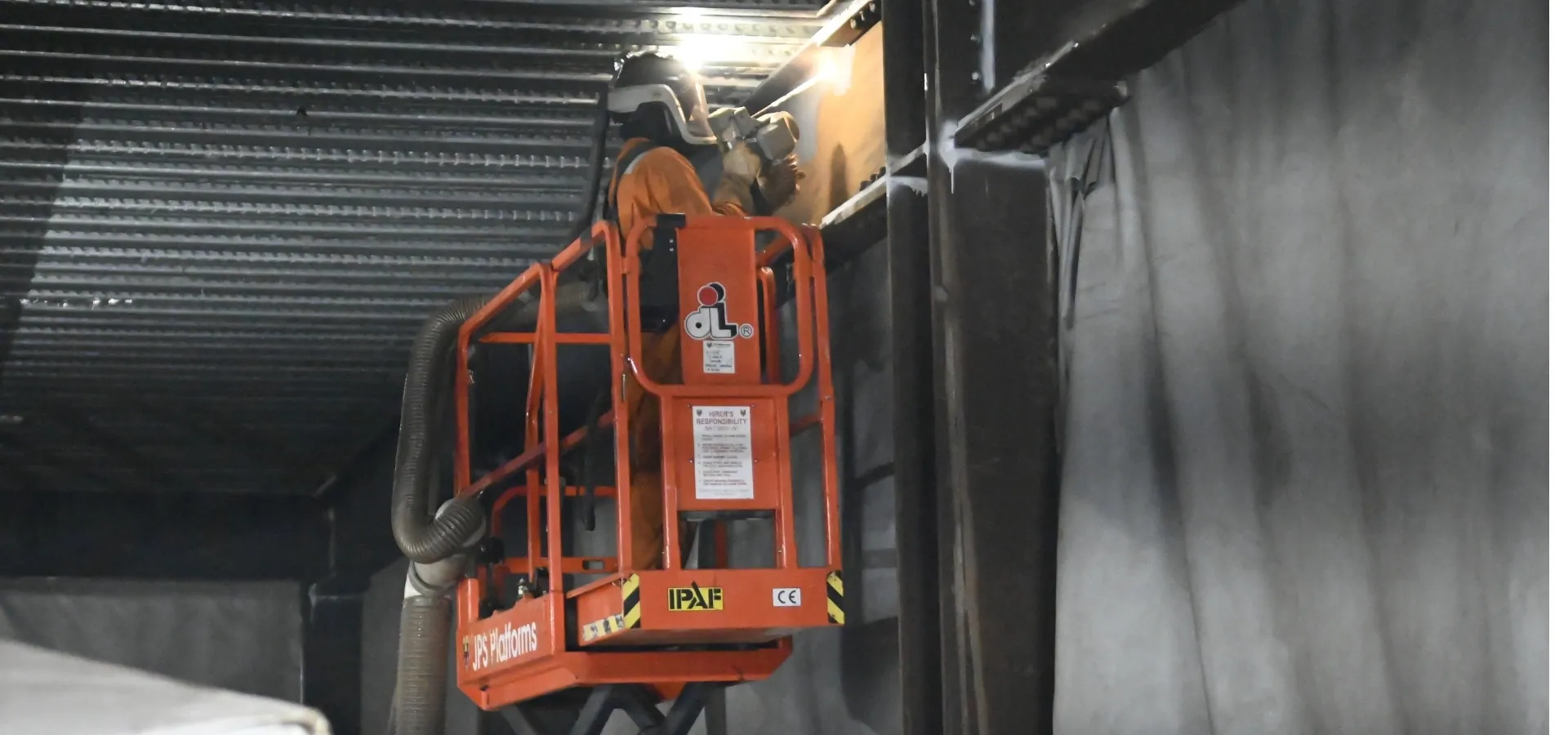
- Access requirements. Working at height, confined spaces, scaffold or MEWP needs, exclusion zones and working alongside other trades. Laser cleaning is a Class 4 laser operation, which means controlled areas have to be set up. That has knock-on effects for adjacent works.
- Programme constraints. Working hours, weekend access, sectional handovers, follow-on trades. Make clear when each area needs to be released.
- Compliance documentation expected. RAMS, COSHH assessments, Laser Safety Officer (LSO) appointment, laser safety classification documents, evidence of operator training. A reputable supplier will provide all of these without being asked. Specifying them flushes out anyone who can’t.
How to budget for it
Laser cleaning is usually competitive with grit blasting on a like-for-like basis once you factor in the costs traditional methods carry but don’t always bill for directly:
- Abrasive media supply and disposal
- Containment setup, monitoring and teardown
- Waste skip hire and removal
- Compressor and plant hire and fuel
- Programme delays caused by dust, noise and waste management on neighbouring works
- Cleaning of adjacent surfaces affected by overspray or media migration
When you compare quotes make sure you’re comparing the total cost of getting from “dirty steel” to “ready to coat”. Not just the cleaning line item. This is where laser cleaning typically wins, sometimes by a significant margin on complex urban sites.
On large structural projects, expect quotes priced per m² with adjustments for access difficulty, element complexity, and required standard. Smaller jobs are often priced as a day or shift rate.
What to ask suppliers when comparing quotes
A good vetting conversation covers:
- Scale capability. How many technicians can they deploy? How many lasers can they run at the same time? Most laser cleaning operations are small, a single technician with a single unit. For any project above a few hundred square metres, you need a supplier with the team and equipment to deliver at pace.
- Safety infrastructure. Who is their Laser Safety Officer? What’s their approach to controlled areas, exclusion zones, and adjacent-trade management? Have they delivered on a tier-one contractor’s site before?
- Extraction and containment. What’s their extraction setup, and what evidence can they show of fume management? This matters increasingly for both worker safety and main contractor risk. Ask specifically about how they handle coated steel, lead-based paint or other hazardous coatings if relevant to your project.
- Coating compatibility. Have they delivered steel that’s been signed off by your intended coating manufacturer? Surface prep standard claims are easy to make and harder to deliver. A supplier with a track record of coating-manufacturer-approved finishes is worth significantly more than one without.
- References. Who else have they worked with at this scale? What can their client say about programme adherence, site management and quality? Tier-one contractor references are particularly telling.
- Sustainability data. Can they provide carbon comparison data for your specific scope? The good ones can quantify waste avoided, carbon saved and vehicle movements reduced. Figures you can put directly into your project reporting.
Where it tends to go wrong
In our experience, three things cause most laser cleaning projects to underperform expectations:
- Late specification. Bringing laser cleaning in after the programme and scaffold strategy are locked makes everything harder. Engage suppliers at design stage where possible or at minimum during pre-construction planning.
- Vague scope. “Clean the steel” leads to disputes. Specify the standard, the area, the access and the compliance expectations.
- Choosing on price alone. The cheapest laser cleaning quote often comes from a contractor who can’t actually deliver at scale, doesn’t have the safety infrastructure for a tier-one site or is using underpowered equipment that will take three times longer than promised. The cost of programme delay dwarfs any saving on the cleaning line.
A final note
Laser cleaning has moved from novelty to credible specification in a remarkably short period. The contractors who can deliver it at scale, safely, on a live tier-one construction site are still a small group. But the technology has been proven on some of the most demanding UK projects of the last two years. If you’re considering it for an upcoming project, the earlier the conversation, the better the outcome.
If you’d like to talk through whether laser cleaning is the right fit for a specific project or how it might work on your programme and budget book a demo with our team and we’ll walk through your scope with you.